Present:
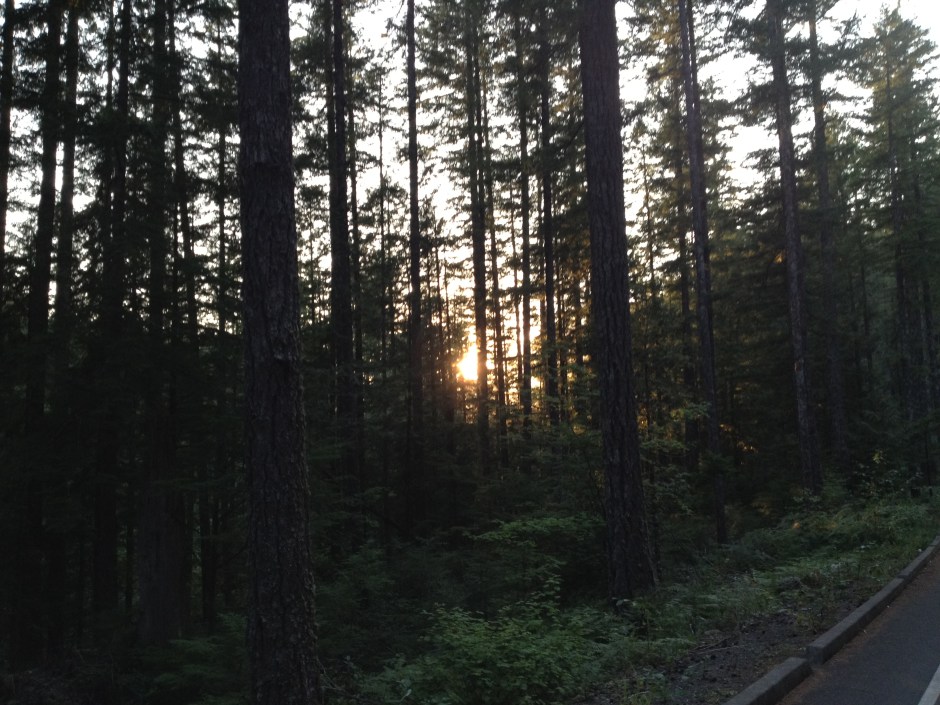
Sustainable logging is the idea of managing forestland in a way that is economically beneficial, and environmentally responsible. Forest product manufacturing has been part of the Oregon economy for years, and by logging sustainably due to the Forest Practices Act established in 1971, Oregonian loggers and foresters can continue to work the forestland. Today, foresters know more about the care and cultivation of trees that allow them to improve forest conditions, whereas before, the focus of forestry was entirely on the cutting and moving of logs.
Past:
Historically, forestry has been a critical element to the Oregon economy. It has been a leading manufacturing industry in Oregon, producing at levels as high as 8.6 billion board feet in 1988. From 1988 to 1995 production numbers dropped 75% as a result of the protection of the spotted owl under the Endangered Species Act and a shift in societal values. Oregon’s foresters have kept the total forest acreage stable by replanting harvests; 30.3 million acres of forestland were standing in 1970, and nearly 30 years later, in 1997, approximately 27.5 acres were standing. Oregon’s forestland has been able to remain stable due to the implementation of the Forest Practices Act in the early 1970s; the FPA laid out strict environmental protection regulations that govern all public and private forest management.
Future:
As indicated in the late 1900s, the future of sustainable logging is entirely up to the societal values of today’s Oregonians.2 Clear cuts are not often thought to be sustainable or pretty sights compared to a lush green forest. With the Forest Practices Act ensuring all public and private harvests are replanted, water sources and wildlife are protected and proper road construction/maintenance are done lawfully, the idea of sustainable logging can continue to provide jobs for roughly 40,000 Oregonians and generate nearly $22 billion in direct economic output.
References:
Oregon’s Forest Operators: Into the Woods with Forestry’s Harvest Experts. Portland: Oregon Forest Resources Institute, 2007. Oregon Forest Resources Institute. 2007. Web. 18 Oct. 2015. <http://library.state.or.us/repository/2009/200904281533592/index.pdf>.
Kitzhaber, John, Ronald L. Daniels, Myrlie E. Williams, David Frohnmayer, Louis Rios, Beverly Stein, Ed Whitelaw, Brett Wilcox, Eric Van Hagen, Jon Yunker, Jeffrey Tryens, Zoë Johnson, Scot Stewart, and Heather Mowry. The 1999 Benchmark Performance Report. Rep. Salem: Oregon Progress Board, 1999. The 1999 Benchmark Performance Report. Oregon Progress Board, 8 Mar. 1999. Web. 18 Oct. 2015. <http://library.state.or.us/repository/2009/200904081053013/DAS_OPB_docs_99report_fullrep.pdf>.
Oregon Department of Forestry. Salem: Oregon Department of Forestry, 2009. Oregon’s Forests: Some Facts and Figures. Sept. 2009. Web. 18 Oct. 2015. <http://library.state.or.us/repository/2012/201203051406411/index.pdf>.
 PH
PH 